Measurement and Counting Vocabulary for Manufacturing Workers
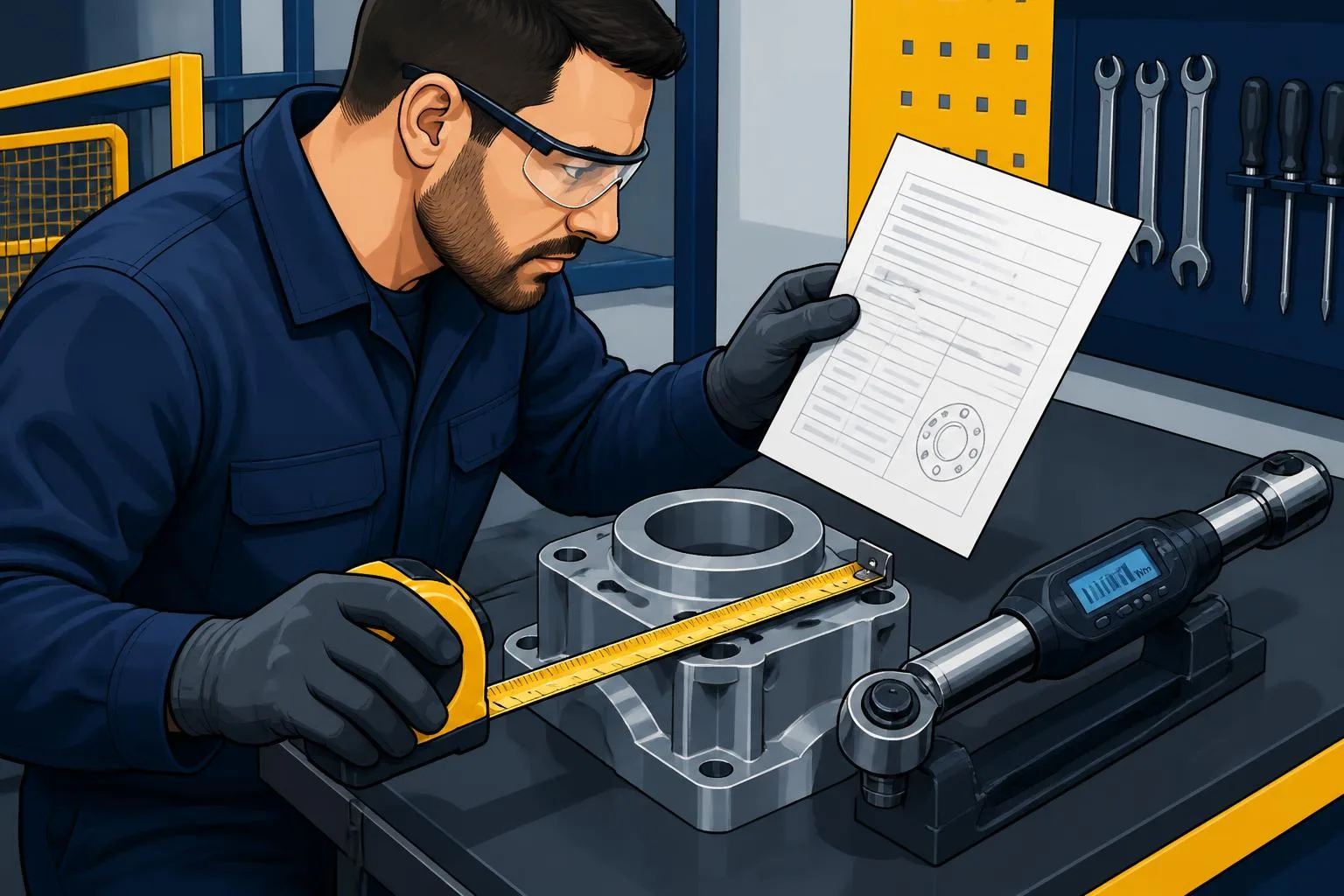
On a factory floor, numbers and measurement units show up in almost every instruction — from a bolt's torque spec to how many parts come in a box. Mishearing a number or a unit can mean a real mistake on the line. This vocabulary covers the measurement units and number patterns you'll use most.
Common Measurement Units
- millimeter (mm) — a unit of length for small parts. "This gap is two millimeters."
- Newton-meter (Nm) — a unit of torque, common in bolt specs. "Tighten to 25 Newton-meters."
- kilogram (kg) — a unit of weight.
These three units appear constantly alongside numbers in work instructions.
Numbers 13–100
After 0–12 (used for telling time), the next numbers you need on a factory floor are 13–100 — used for part counts, sizes, and codes.
- 13–19: thirteen, fourteen, fifteen... nineteen
- Tens: twenty, thirty, forty... ninety
- Combined: twenty-five, forty-two, seventy-eight
- 100: one hundred
Ordinal Numbers
Ordinal numbers describe order or position, and they show up constantly in work instructions:
- first, second, third
- fourth, fifth, sixth, seventh, eighth, ninth, tenth
Example: "Check the first bolt, then the second bolt."
Counting Parts
Beyond plain numbers, a few extra words describe groups or sets of parts:
- piece — "Ten pieces per box."
- pair — two matching parts.
- batch — a group of parts processed together.
- box
Try the Quiz
You'll use these numbers and units every day to read work instructions. Try the short quiz below to check what stuck.