Picture an English Sentence Like a Movie Scene — The Past Continuous vs Past Simple Cheat Sheet
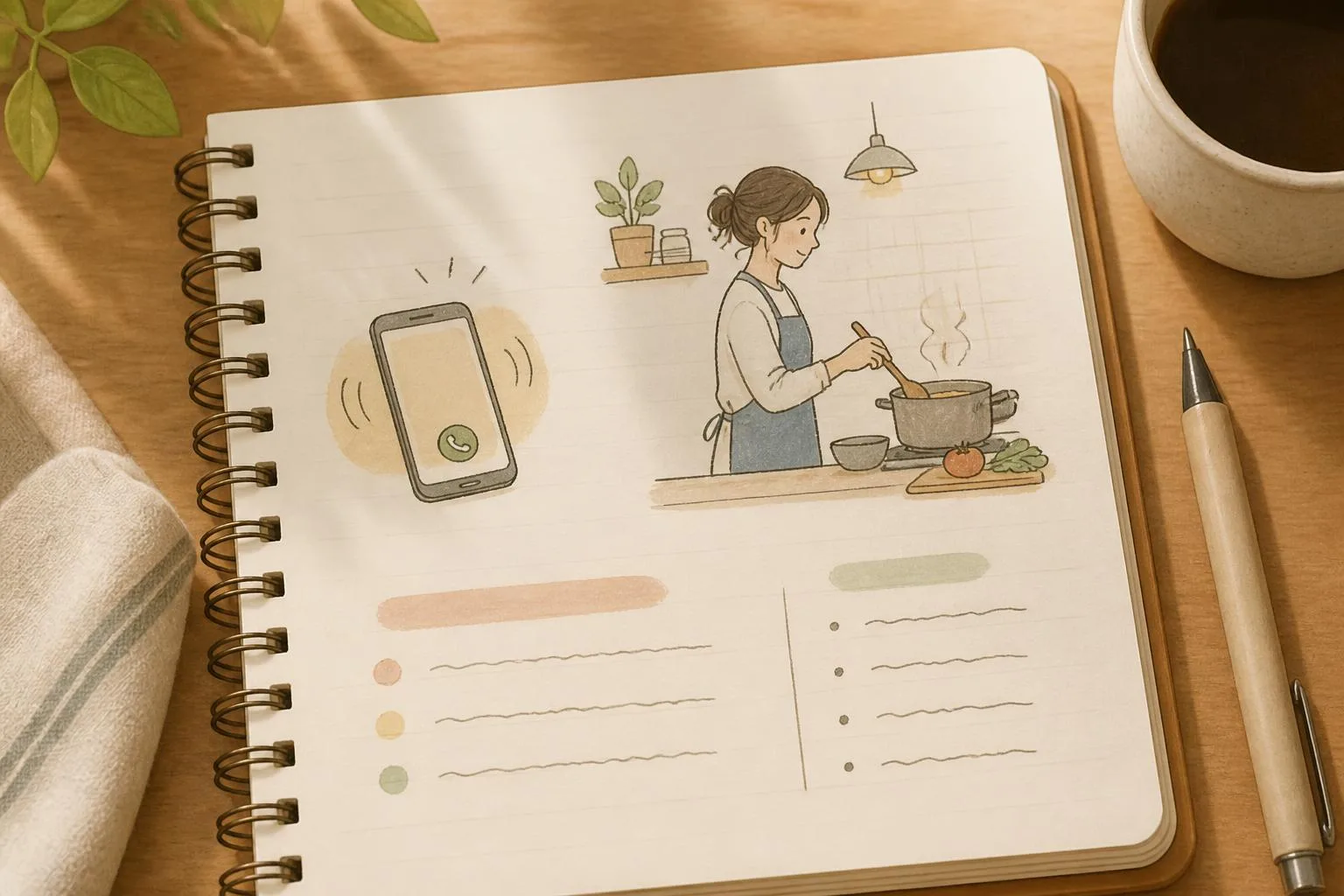
"While I was cooking, the phone rang." This one sentence uses two different past forms at once — and that's not a coincidence. The easiest way to understand past continuous is to picture it like a movie scene: one action is the ongoing backdrop, and another action is the sudden event that cuts through it.
1. Past Continuous — The "Camera Is Rolling" at One Past Moment
Formula: subject + was/were + verb**-ing**
| Subject | Form | Example |
|---|---|---|
| I / he / she / it | was + verb-ing | She was cooking dinner. |
| you / we / they | were + verb-ing | They were watching TV. |
Used for an action in progress at a specific moment in the past.
At 8pm, I was studying. While she was cooking, the phone rang.
💡 This is actually the same concept as present continuous, just shifted into the past. Remember present continuous for an action in progress "right now" (I am studying)? Past continuous does exactly the same job, just with "right now" moved back to a point in the past. If you already understand continuous logic in present tense, you just shift the vantage point backward — the underlying logic doesn't change at all.
2. Past Simple vs Past Continuous — Background vs Interruption
Formula: longer background action = past continuous · shorter interrupting action = past simple
While + past continuous, + past simple.
While I was cooking, the phone rang.
Past continuous + when + past simple.
I was cooking when the phone rang.
| Past Simple | Past Continuous |
|---|---|
| a completed single action | an action in progress at a moment |
| The phone rang. | I was cooking. |
💡 Picture it like a movie scene: past continuous is the camera rolling on a scene that's already in progress — cooking, walking, sleeping. Past simple is the sudden event that cuts through that scene — the phone rings, a knock at the door, an alarm goes off. "While" usually introduces the ongoing background scene (the longer action), while "when" usually introduces the sudden event that interrupts it (the shorter action). Once you see a sentence as "an ongoing scene + a sudden interruption," choosing the right form for each action becomes far more intuitive than memorizing "when vs. while" as a separate rule.
Cheat Sheet — Save This
- Past continuous = was/were + verb-ing, for an action in progress at one point in the past — the past version of present continuous.
- Interruption pattern: longer background action → past continuous; sudden event that cuts in → past simple.
- While is usually followed by past continuous (the background scene); when is usually followed by past simple (the interrupting event).
Once you picture a past sentence like a movie scene — an ongoing backdrop, then a moment that cuts through it — you no longer need to memorize "when uses this, while uses that" as separate rules.